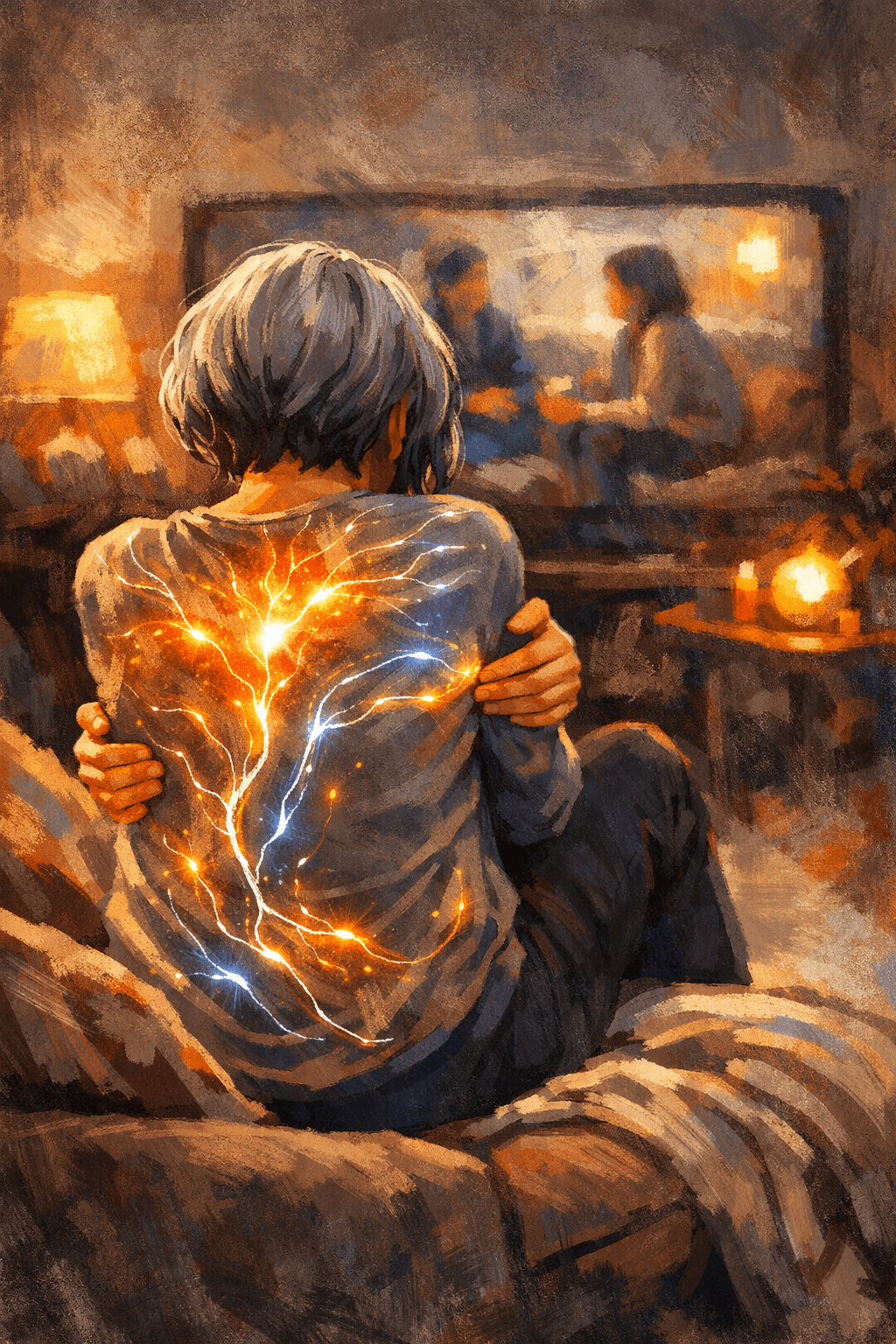
The other day while watching a show, I noticed something in myself that made me pause.
There were two scenes that felt very similar. In one, two men were sitting together talking about life. In the other, two women were doing almost the same. The setting was calm, the conversations were thoughtful, and yet my reaction to each scene was completely different.
While watching the two men, I felt uncomfortable in my body. I wanted the scene to end. I felt tense, unsettled, and almost as if I needed to leave. But when the scene changed to the two women talking, I had the opposite reaction. I wanted it to last longer. I felt drawn in and at ease.
That difference stayed with me.
It made me wonder whether memory is stored not only in the mind, but somehow in the body too, perhaps even deep within the tiny cells of the body itself. I do not know how literally that is true, but it is what the experience made me feel. My reaction did not begin as a thought. It began as a feeling in my body. A tightening. A discomfort. A sense of wanting to escape. It was simply my body responding before my mind had found the words.
That moment brought me back to something I have been learning in therapy.
In one session, I was asked to return to a vivid and painful memory. As I began describing it, my body reacted so strongly that I went into a severe panic response, and the whole session became about grounding me. By the third session working on that same memory, I was surprised that I could no longer remember every detail with the same sharp intensity. My therapist explained that this was the point: not to erase the memory, but to process it so it could move into long term memory without holding me so painfully in the present.
That changed how I think about memory.
Memory is not only what helps us look back. It is what allows us to stay connected to people, to love, to loss, and to the meaning of what we have lived. But memory also protects. The body remembers what once felt unsafe and can react before the mind understands why.
That does not mean the body is wrong. It means it learned how to survive.
What I am beginning to understand is that healing is not about losing the memory, but about loosening its hold. The experience remains part of the past, but it no longer needs to keep taking over the body as if it is still happening now.
 Burning Beneath
Leave a comment