Recently I found myself going back to something from my childhood. I started rewatching old Arabic television series that used to play in our house when I was growing up. Back then they were simply part of daily life. The family watched them together and as children we absorbed them without questioning much of what we were seeing.
Watching them again now, at this stage of my life, feels completely different.
The more I watch, the more shocked I become. Scenes that once passed unnoticed now stand out clearly. I see women being silenced, their opinions dismissed, their lives controlled by the men around them. What once looked like normal family stories now reveals the reality women were living in those years. These shows were not exaggerations. They were reflections of society.
Seeing them again now makes me ask a question that has stayed with me ever since.
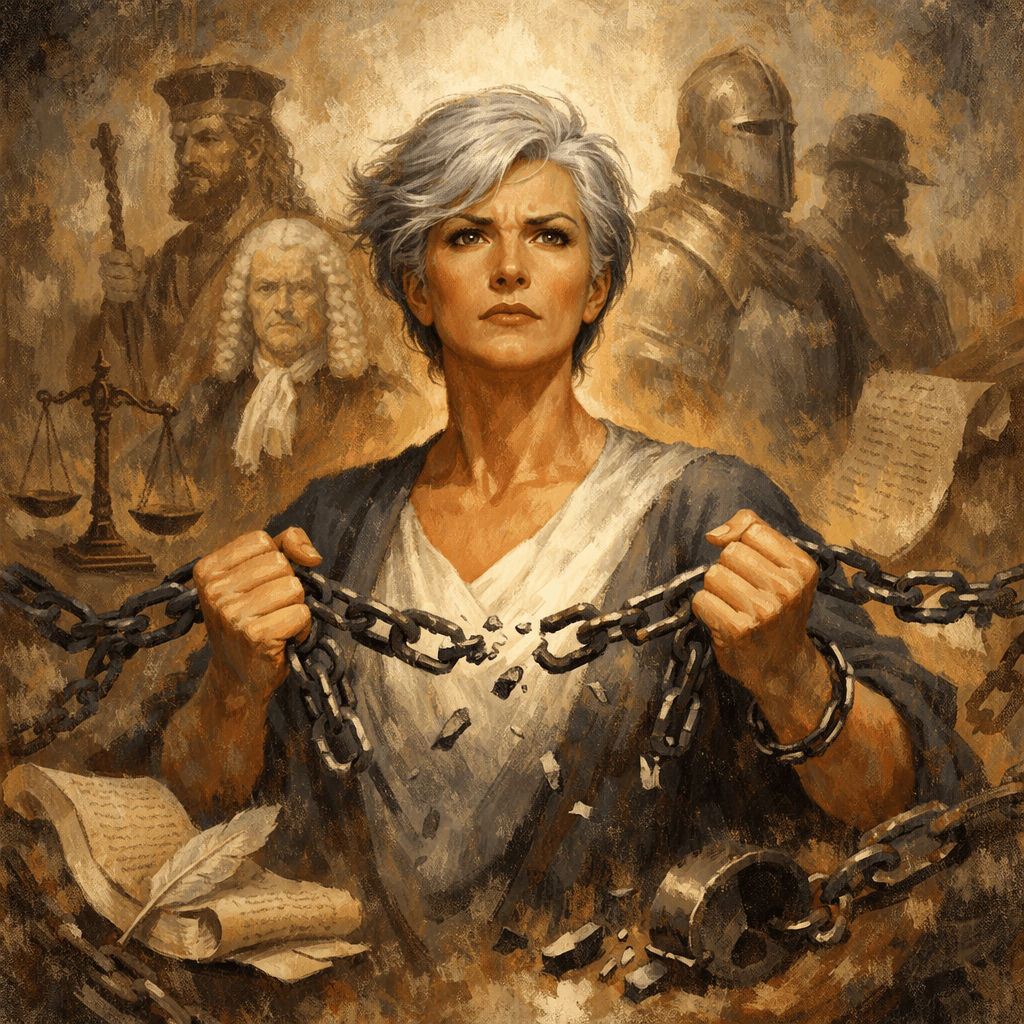
When did men decide they had the right to control women?
I grew up in the Middle East and lived within cultures where the expectation was often clear. Women should obey the men of the house. Sometimes that man was older. Sometimes he was younger. It did not matter. Authority belonged to him simply because he was male.
Of course cultures are not identical everywhere. Some families are liberal, others conservative. Some women wear the veil, some do not. Some homes allow more freedom than others. It is not a single rule applied everywhere. But across many communities in the region and across parts of Asia, the same pattern appears again and again. Men hold authority and women are expected to follow.
Historically the situation was sometimes even more extreme. In parts of the ancient Arab tribal world, before later reforms changed these practices, women could actually be inherited when a husband died. The widow could become part of the deceased man’s estate and be claimed by his son or another male relative. Imagine that reality. A woman who had just lost her husband suddenly treated as property passed from one man to another. The idea that a human being could be inherited shows how deeply women were once viewed as possessions rather than individuals.
Growing up, I lived in a household where disobedience toward the men of the family could sometimes be met with violence. Being beaten was considered discipline. That was the environment around us. Yet even as a child something inside me resisted it. I have always had a strong character. I have always been independent and driven. I worked hard and excelled in my career. I never believed that I should wait for a man to support me or control my life.
One memory from my university years in Iraq remains vivid even today. I wanted to take driving lessons. My uncle lived in the house with two of my aunts. He was only a few years older than me and actually the youngest among them, yet he controlled the household. I had already seen him hit one of my aunts, his older sister, because she did something he did not approve of. That moment stayed with me.
When I told him I wanted to take driving lessons, he immediately said no. I asked him why. His answer was a sentence I have never been able to accept.
Because I said so.
I told him that was not enough for me. I needed a reason. I was not going to accept something simply because he said it.
Then he said something that changed the entire moment.
If you go, you don’t come back.
It was a clear threat. I was their niece, an orphan without parents, and that house was the only place I had.
I went upstairs to my room and packed a small briefcase. I put in my passport, my money, and my official documents. I was angry, so angry that when I went to the driving lesson I barely paid attention to the instructions. I had a female friend with me, so it was not even something against the culture. Women did drive in Iraq. But this was not about culture. It was about power.
Later I stayed briefly with a female friend in the university dormitory. She calmed me down and advised me to go back home. If he truly kicked me out, she said, I could always return to stay with her. So I went back. My oldest aunt thanked me for coming back, but from that day forward my uncle and I never spoke again. Even today we still do not.
Years later I moved to Kuwait. By then I was married and had four children. For most of that time I was the primary breadwinner in the household. I worked, earned the income, and supported the family. My children attended private school because they were not citizens and could not enroll in public education. I was the one paying the tuition.
One year I paid the full school fees in advance. Soon after, a scandal happened at the school and I decided to withdraw my children. When I went to the administration to request a refund, they refused to give me the money. They said the father must come to collect it.
I explained that I had paid the fees myself and showed them the receipts. They acknowledged that the payment was mine.
Yet they still refused.
In one sentence they erased my authority.
You are the mother.
The money was mine, yet the decision belonged to a man.
This was not the first time the system had erased me. Before my marriage my fiancé and I went to the courthouse to ask about the marriage procedures. In that country marriage is governed by religious law. The judge told me I needed my father present because his approval was required.
I explained that I did not know my father. He had divorced my mother the day I was born and my mother had since passed away.
The judge repeated that it did not matter. Without my father’s approval I could not marry.
I was twenty nine years old.
A grown woman with a university education standing there being told that my life decision still belonged to a man I had never even met.
I walked outside and cried. A female clerk approached me quietly and told me to speak with the technical judge. When we did, he asked questions about me and about the man I intended to marry. Our education, our families, our social standing. When I asked him why these details mattered he explained that he needed to protect the marriage from future objections. If my father ever appeared later and tried to challenge the marriage, the judge needed proof that the match was appropriate.
Even at twenty nine years old, the shadow of male authority could still reach into my life.
When I look beyond my own experiences and into history I see that this pattern is not limited to the Middle East or to one religion or culture. Versions of it appear throughout the world. In ancient Greece women were excluded from political life and expected to remain inside the household. In ancient Rome women lived under the authority of their fathers and later their husbands. In traditional Confucian societies in China women were expected to obey their father, then their husband, and eventually their sons. In medieval Europe laws erased a married woman’s legal identity and transferred it to her husband. Even the witch trials disproportionately targeted women, particularly those who were independent or outspoken.
Across continents and centuries the same pattern appears.
When women finally began to gain rights it came through long and difficult struggles. In many countries women were denied the right to vote until the late nineteenth or early twentieth century. In Canada women gained the federal vote in 1918. Women had to fight for education, property rights, the right to work, and the right to control their own bodies.
And still the question remains. Why did women have to fight for rights that should have belonged to them simply because they are human.
Even in modern societies where women’s rights have improved, equality still feels incomplete. A woman may now have the freedom to work, to build a career, and to earn her own income. Yet when she returns home another expectation often waits for her. The household responsibilities, the cooking, the children, the emotional work of holding everything together still fall largely on her shoulders.
A man may go to work for the same number of hours and return home believing he has done his part. Meanwhile the woman who worked those same hours begins a second shift inside the home.
Yes, there are families where responsibilities are shared more equally and that is real progress. But the reality in many homes is that true balance is still far from universal.
So the question continues to echo in my mind.
When did men decide they had the authority to control women.
And when will humanity finally recognize something that should have been obvious from the beginning.
No human being is born above another.
Men are not born rulers.
Women are not born subjects.
We are simply human.
 Burning Beneath
Leave a comment