Every year on my son’s birthday, we follow the same tradition—breakfast at a nice spot, then a visit to the toy store where he picks a gift of his choice. It’s a simple ritual, something small yet meaningful.
This time, he picked up a dinosaur toy, medium-sized with an open jaw lined with teeth. Nothing extravagant. Just a toy. When we checked the price, it was $60.
My first reaction was disbelief. Why would this cost sixty bucks? But beneath that surface reaction, something heavier settled in.
It wasn’t about the toy. It was about what it represented.
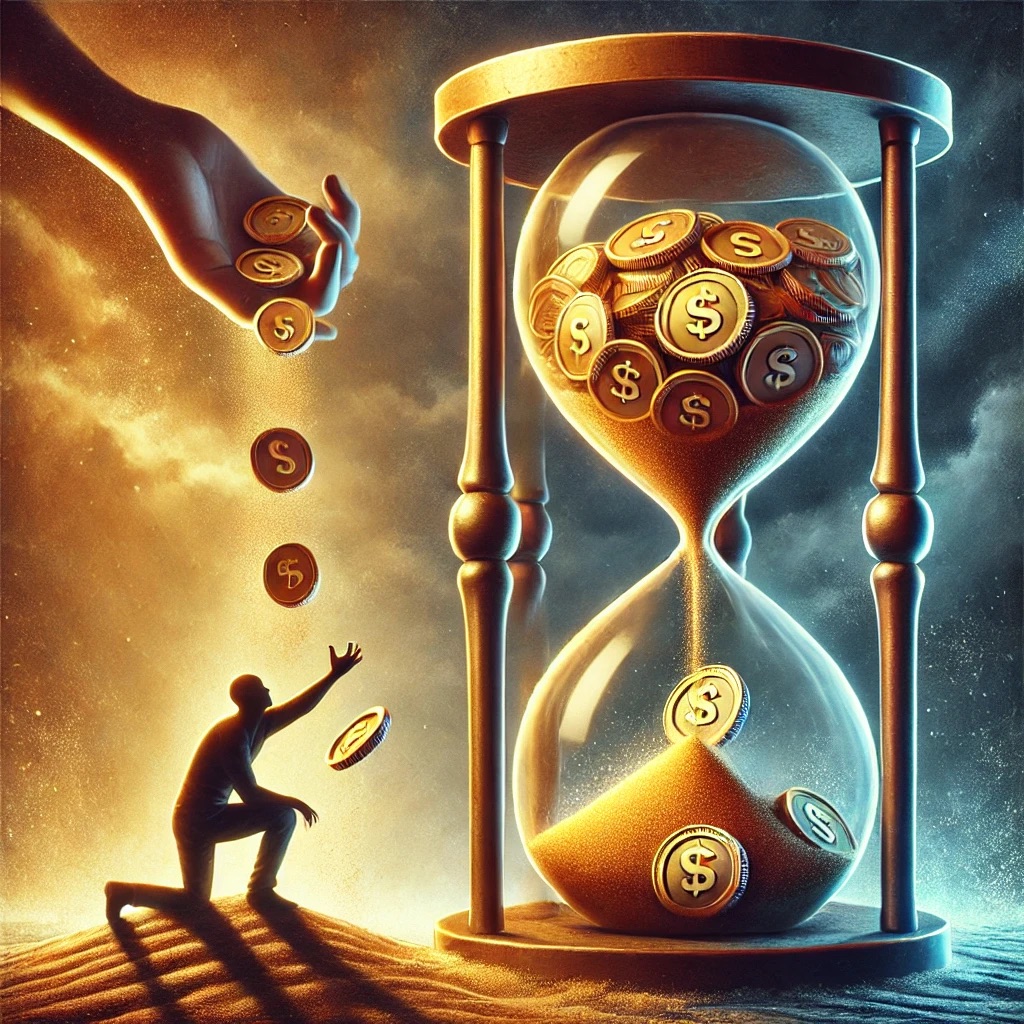
Sixty dollars. A price tag placed on plastic and paint. But beyond that? It reflected something deeper—the way money, the thing we work for, trade our time for, feels increasingly valueless. Not in the literal sense, but in the sense that it doesn’t stretch the way it once did. It buys less. It holds less weight. And in turn, it makes the time spent earning it feel like it’s worth less too.
And that’s the frightening part.
Because if money loses value over time due to inflation, then doesn’t that mean that the time I spent working to earn that money is also worth less? If the money I made today will buy me less tomorrow, then was my time—the hours I spent working for that money—also devalued?
This means every moment I trade for money is being compensated less and less over time. The same hour of my life that I gave away in the past was worth more back then than it is now. And the older I get, the more my time seems to be worth even less—not because I lack experience, but because wages don’t rise with inflation, and society values labor less as we age.
So for money, time reduces its value. And for humans? Time also reduces our value in the workforce.
That realization is unsettling.
I used to think experience made someone more valuable. But instead, the more years we give, the less we’re compensated. The more time we invest, the less return we seem to get.
But then, a contradictory thought surfaced—what if time actually becomes more valuable, not less?
Yes, society might measure my time in diminishing returns, but to me personally, time is growing in worth every single day. Because the less time I have left, the more precious it becomes.
In a way, money and time follow opposite trajectories. Money fades, inflates, devalues. But time? Time becomes rarer. And the rarer something is, the more precious it is.
So maybe the trick is realizing this before it’s too late. Not waiting until my last years to cherish every moment. Not spending my time chasing something that only loses meaning.
Maybe the real currency isn’t money at all. Maybe it’s time well spent.
So, I come back to the same question: Am I working to live, or just existing to work?
And more importantly—how do I reclaim my time before it slips through my fingers?
 Burning Beneath
Leave a comment