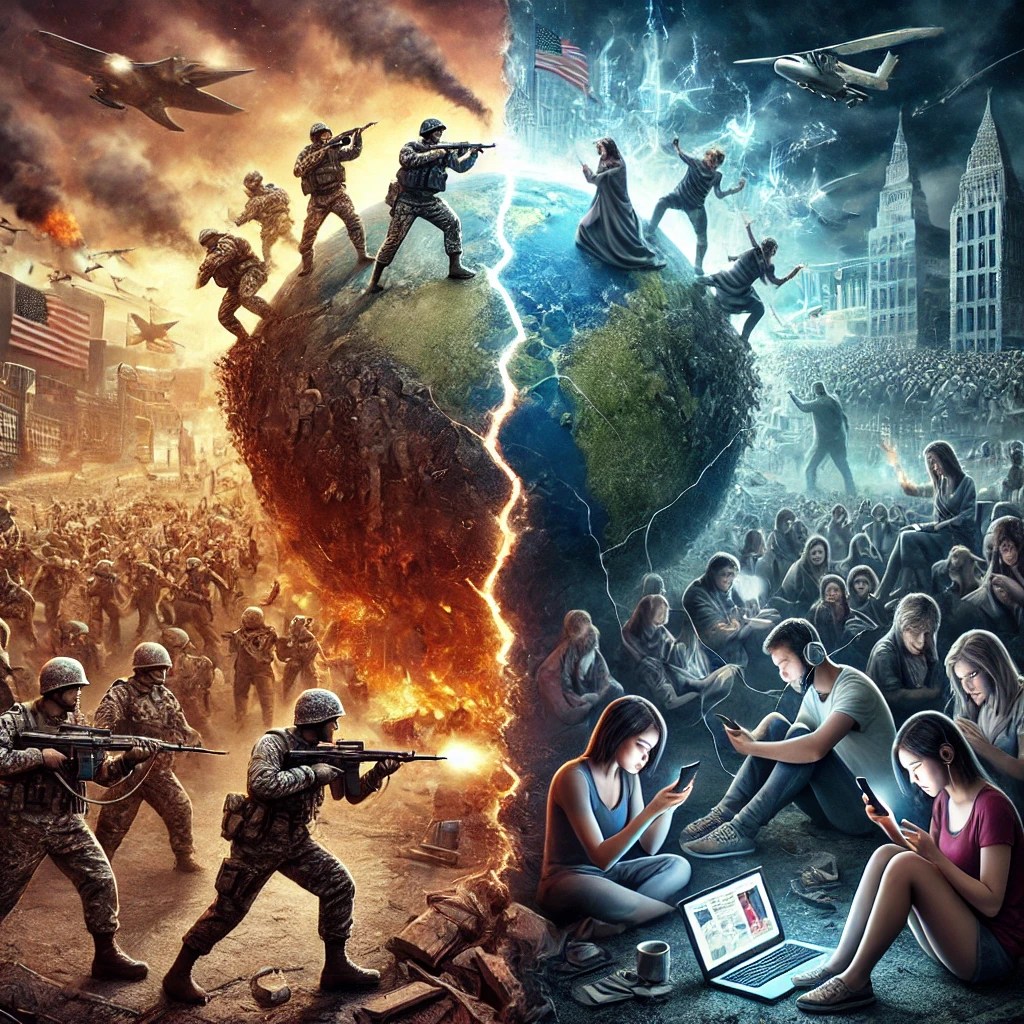
Fight! Fight! Fight!!!
How sad it is to grow up in a world full of conflict—wars breaking out, politics turning ugly, and social media fueling division and anger. Countries fight, people suffer, and economies struggle. For what? Power? Resources? Control? Different beliefs clash with no room for understanding, making the world feel more divided than ever.
For the first time, I drove with complete serenity, letting violin music run wild through my soul, transcending me to a world of calm and peace. I must admit—I am an angry driver. Other people on the road get on my nerves, and I lose control over my language. It only happens when I drive, never anywhere else. But today, at 51 years of age, something changed. When someone cut me off, I didn’t react. I didn’t curse or fume. I simply continued driving, as if strolling through life, unbothered, calm, and serene, my soul absorbing the melodies through my earbuds.
This is it. The ability to let things pass without making a scene, without exaggerated reactions, without letting the little things dictate our emotions. But can we do the same for the world around us?
Can we simply let the back-and-forth verbal wars between countries slide by? If we do, are we complicit in allowing injustices to persist, or are we simply preserving our own peace? If history has shown us anything, it’s that silence can sometimes be mistaken for consent. Conflicts escalate, freedoms erode, and suffering continues when people choose indifference over action. Yet, constant engagement in these battles also takes a toll, leaving us exhausted and divided. Where is the balance between speaking out and maintaining our own sense of peace? Can we remain detached from the actual wars being fought? Look at Ukraine, where lives are shattered daily. Look at Gaza, where children grow up knowing only the sound of sirens. Look at the chaos in Sudan, where survival is a daily battle. People take sides, argue, and debate, but do their voices truly change the course of these wars? Or do they simply fuel division?
To affect change, our voices must be heard. But how? Should we follow Gandhi’s peaceful resistance? Or should we take a different path, like Palestine’s rock revolution? Or should we do nothing at all? To what end? Some say peace is the only way forward; others believe force is necessary to reclaim what is lost. In the U.S., political debates have turned into battlegrounds where no middle ground exists—either you are with or against, and there is no in-between.
A major divide exists between those who fight for personal freedoms and those who fight for collective safety. Throughout history, societies have struggled to balance these perspectives. The American Revolution was a fight for individual liberty, while World War II saw governments enforcing rationing and restrictions for the greater good. In more recent times, debates over public health measures, internet censorship, and national security reflect this ongoing tension. The challenge remains: how do we create a society where both personal autonomy and collective well-being can coexist? One side prioritizes individual rights, autonomy, and choice—the ability to decide what is best for oneself, free from government interference. They argue for minimal restrictions, such as the right to choose whether to get vaccinated, to speak freely, or to live without imposed limitations. On the other hand, the collective safety approach focuses on protecting society as a whole, even if it means restricting certain individual freedoms. This side advocates for vaccine mandates to prevent disease spread, speech regulations to prevent harm, and enforced lockdowns or mask mandates to protect public health. The real challenge is finding a balance between respecting personal rights and ensuring the safety and stability of society as a whole.
If we stay silent, does that mean we accept? Or does it mean we are indifferent? If we keep going down this path, what other rights will be taken from us? Were vaccines truly a choice, or were they forced upon us? What about abortion rights, freedoms, race, ethnic identities? What’s next? Every issue has two sides—one fighting for personal freedoms, the other for collective safety. Who is right?
Do we only have two choices in this life? Fight or accept? Or is there a middle ground—one where dialogue, compromise, and thoughtful action shape the path forward? History has shown that progress often emerges not from extremes but from those who bridge divides. The Civil Rights Movement, for instance, combined peaceful resistance with legal action to enact change. The end of apartheid in South Africa was achieved through negotiations rather than prolonged war. Perhaps, instead of being trapped in the binary of conflict or submission, we should seek ways to engage, understand, and find solutions that honor both personal freedoms and collective safety. Is there another way? What if the real answer is in how we choose to engage? In how we build understanding rather than just choosing a side? In how we listen before we react? Perhaps the question isn’t about fighting or accepting but rather about changing the way we see and engage with the world.
Maybe, just maybe, there is another way.
 Burning Beneath
Leave a comment