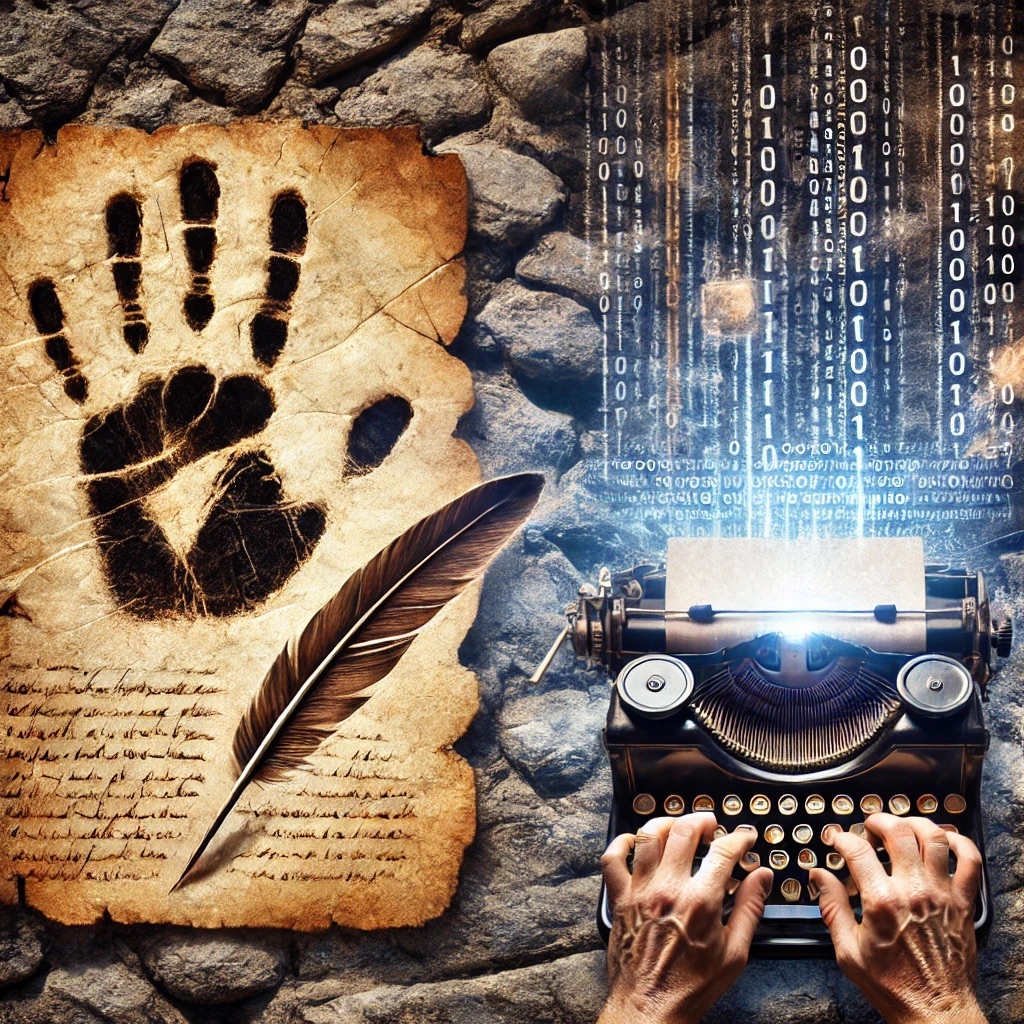
From the earliest cave paintings to the vast libraries of today, humans have always sought to record their existence. We carve our stories into stone, write them in sacred texts, document them in books, and now, we archive them digitally across the internet. But why? What is it that drives us to preserve history? Is it simply to inform future generations, or is there something deeper—an innate desire to defy time itself?
History is more than just a collection of events; it is the memory of humanity. Without it, we are lost, disconnected from the past and blind to the future. But where does this need come from?
Some say it is practical—the need to learn from past mistakes, to pass down knowledge, to ensure that civilizations do not repeat their failures. Others argue it is about identity—history tells us who we are, where we come from, and what defines us as individuals and societies.
But perhaps, at its core, the need to preserve history is a fight against oblivion.
Human life is fleeting. Every generation is born, lives, and then fades into the past. But stories, records, and legacies allow something to remain. The act of writing, painting, sculpting, recording—it is an attempt to leave an imprint, to say, “I was here. We were here.”
History, in many ways, is an attempt at immortality. Whether it is the Pharaohs of Egypt building massive pyramids, emperors commissioning statues, or even an ordinary person keeping a diary, there is a deep desire to ensure that one’s existence is not forgotten. To be remembered is, in a way, to live beyond death.
But here lies the paradox—while history is meant to preserve truth, it is often shaped by those who tell it. Victors write history. Religious texts, foundational myths, and historical records may reflect reality, but they are also subject to bias, interpretation, and the agendas of those who recorded them.
We look at ancient civilizations and wonder: Did the events really happen as they were recorded, or have they been altered, exaggerated, or even entirely fabricated over time? Did the laws, commandments, and moral codes inscribed in stone come from divine origins, or were they human constructs designed to shape society?
And in modern times, we face the same challenge. The digital age has brought an overwhelming flood of information, where facts and fiction blend seamlessly. Fake news, manipulated narratives, and rewritten histories force us to constantly question: How do we know what is real?
So, why do we continue to tell our stories? Is it about truth, identity, survival—or is it simply an attempt to leave a mark on the world?
Maybe history is not just about remembering the past, but about shaping the future. Maybe it is not just about recording events, but about defining meaning. And maybe, deep down, we preserve history because, without it, we fear that one day, everything we were, everything we did, and everything we believed in will simply disappear.
What do you think? Do we preserve history for knowledge, for truth, or for something more—something eternal?
 Burning Beneath
Leave a comment